Why should I read someone else’s daydream?

Some stories feel like a way of running away. But the best ones do something stranger and gentler. They bring you back. Back to a door you did not know was yours, in a house you have never seen, where another person’s longing fits, almost eerily , the exact contour of your own. That is the quiet trick of a stranger’s daydream. It loosens the seams of the self. Read enough of them, and you cease to be only one person, you become, instead, a meeting place.
So why should I read someone else’s daydream?
I do not remember the first book I ever read, but I remember very clearly the first person who spoke to me about books. It was Valsarajan mash, my teacher in fourth standard. The conversations themselves have faded; their exact words have slipped away like water through the fingers. Yet the ritual he gave us remains luminous and intact in memory. Every December, a small bookstall appeared in our hometown, Payyanur. It was called December Books, and it was run by a man named Jayadevan. It was not, strictly speaking, a proper bookstall. The books were arranged somewhat haphazardly on tables and desks lined up side by side on the ground floor of an unfinished building near the old bus stand. The square room was enclosed on its sides with blue tarpaulin, and so the afternoons inside were blazing hot, thick with the smell of vanillin that seemed to rise from the place itself, as though the books were being baked into memory. Valsarajan mash told us to go there and say his name like a secret code to Jayadevettan, so that we would be given a small discount on each book we bought. And it worked. To us, this felt like a kind of magic. Soon the bookstall became a site of pilgrimage for our class, and then, almost inevitably, a site of friendly competition. Who had gone? What had they bought? What had Jayadevettan said? We became acquainted with him, and then fond of him. He was a voracious reader himself, and under his generous gaze we were allowed not only to buy books but also to sit and read there, our small bodies folded among the stacks of Malayalam classics and translated Russian short stories.

By the time I was in fifth standard, either December Books and Jayadevettan had disappeared from Payyanur, or they had disappeared from our collective memory. I no longer remember what exactly happened. But after that, I began to visit a local library for books. Reading became a pleasure. Yet pleasure was not my only reason. Valsarajan mash and Jayadevettan, among others, had told us repeatedly that to be a good reader was to become a good person. I believed them. I wanted to be good, and I wanted a good job. For both, they said, reading was necessary. So I read. And slowly, as I grew older, I discovered something else: reading stories was also a way of running from home, especially at night, without ever having to leave home. I had always wanted to run from there. During my higher secondary years, I barely read fiction at all. My undergraduate life was eventful; I fulfilled that old dream of running away. For three years, I read almost nothing. Then, at the end of my master’s degree, I returned to books, but they were different books now. I began reading non-fiction: academic papers, books, arguments, theories. In the last four years, through my PhD, the discipline of reading non-fiction restored itself to me as a pleasure. And yet, whenever I tried now and then to return to fiction, a question kept taking root inside me.
Why should I read someone else’s daydream?
I know it is a crude question. A philistine question, perhaps, one steeped in the instrumental rationality that asks everything to justify itself. The question comes from a sedimented academic understanding of reality as though reality were only a wall made of facts, neatly arranged brick by brick. Reading, or any pursuit of knowledge, is then reduced to a matter of rationally examining this wall, of knowing the facticity of objects. That is the educational inheritance from which my question emerged. I understand, of course, that literature is more than a daydream; its content and form are shaped, however subtly, by the mechanics of history. It is never a purely private affair, neither for the writer nor for the reader. And still the question persisted. Any one of us can conjure stories out of our unsatisfied desires. We do it every night, involuntarily, in the theatre of sleep, and sometimes even in the day. We even tell good stories when we lie. There is a beautiful short story by Ashita, the Malayalam writer, called “Kallu Vacha Nunakal,” in which a child cannot quite distinguish between the bedtime stories told by the grandmother and the lies told by friends; for the child, more often than not, both seem to belong to the same domain. So why should I spend my waking hours inside the transformed, socially acceptable fantasies of a stranger? Pleasure and cultural literacy are two obvious answers. But what does literature give us beyond pleasure and cultural literacy?. There are many answers, I am sure. One of them is that literature offers us the possibility of metamorphosis. It gives us the chance to become someone else, somewhere else, in some other time. I used to love this as a boy, on train journeys to Sali teacher’s house, staring out of the window at a field where a child was playing, and imagining myself into that small running body, the one who would have to return home in half an hour and receive the day’s scolding from his mother. It was fun. But it was also more than just fun.

Let me try to say why.
Imagine I am reading a story set in Thanjavur. The protagonist is a ten-year-old Tamil boy who lives quietly with his mother and grandmother. His mother is still beautiful, middle-aged, always wearing kanakambaram flowers in her hair, and she carries the quiet resilience of women who have been left behind. The boy has been waiting for years—for his father, who disappeared when he was two or three. At school he is bullied, called a bastard. Every night he dreams his father back into existence. Then one Sunday evening there is a knock at the door. When the boy opens it, he finds a transgender person standing at the threshold in a black saree patterned with red hibiscus flowers, fully made up, luminous and unfamiliar. The mother recognizes, in this figure, the husband who had eloped years ago. The boy is bewildered. This, of course, is one of the stories from the Super Deluxe anthology.
As I read, I am no longer only myself. Visualize it: a tunnel opens above my head and stretches all the way to that modest house in Thanjavur. I am simultaneously here and there. And because I am also someone who waited for years for my own father, the tunnel runs backward in time into the rooms of my childhood. What would it have been like to see my father return—not as the man I had imagined, but as someone who had shed the very form I associated with fatherhood? How would I face my mother, who is still in her mid-thirties? How would I face the classmates who had tormented me? How would I even look at this person who had returned, a father who was no longer a father, at least according to every understanding of “father” I had inherited? My idea of a father was never purely personal, and neither is yours. I inherited it. I assembled it from the culture around me, from films, from school, from places of worship, from other families, from the silent lessons of how fathers are supposed to walk, speak, and be. Now the tunnel to Thanjavur contradicts that idea. It shakes it. In some moments it even resonates with it, because longing is longing, regardless of the form it wears. But the overall effect is expansion. My understanding of “father” grows larger, more complex, more tender. This is the quiet miracle of fiction. Every time I read, I build another tunnel—to another place in the world, another moment in time, another body. In each tunnel, something I thought I understood is contradicted, or echoed, or stretched beyond its previous shape: father, mother, home, love, grief, justice. For instance, one may think of mother as a prostitute who, in the middle of sex with her customer, sees an army of ants marching toward her crying baby lying in the same room, in one of Basheer’s stories. Sunil P. Illayidom often speaks about this. Such images do not merely surprise us; they alter the emotional grammar through which we think. Over time, these tunnels do not remain separate. They connect. They cross. They form a network beneath the surface of consciousness, linking my life to lives I will never live, linking my small story to the vast, murmuring epic of human existence.

I have come to believe that this network is where political consciousness begins. It is where it must begin. As long as one remains sealed within the isolated experience of one’s own gender, one’s own race, one’s own caste, one’s own wound, politics can only go so far. It remains a politics of the self, and that is no politics at all. But when you have built enough tunnels, when your understandings have been repeatedly contradicted and enlarged, when you have felt—even for a moment—the bewildered heart of that ten-year-old boy in Thanjavur, or the exhaustion of his abandoned mother, or the impossible courage of the person in the black saree who returns, carrying with her the ghost of an absent father, then the boundaries of the self begin to soften. They begin to dissolve. This is what good literature does. It is not merely someone else’s daydream. Or rather, it is precisely that—and that is where its power lies. Because the daydream, when shaped by a true artist, ceases to remain an escape or an unconscious desire; it becomes a social thing, a public thing. It becomes personal and public at once, for both the creator and the reader. And so I think, again, of Jayadevettan’s bookstall, of those hot December afternoons when I first learned this without knowing I was learning it

And so,
to the question—why should I read someone’s daydream?—I return now with a different answer.
I read because I do not want to be trapped inside the narrow cell of my own experience. I read because the tunnels I build through fiction make me more human, and more porous, and less certain in the best possible way. I read because the daydreams of strangers, in all their mystery and specificity, turn out, again and again, to be maps of our shared world. And I read, finally, because the first lesson I was ever given about books remains true, though I understand it differently now: to read well is to become good. Not good in the sense of moral purity, but good in the deeper, harder sense of becoming political, becoming responsive, becoming less sealed off from the world and from others within it.

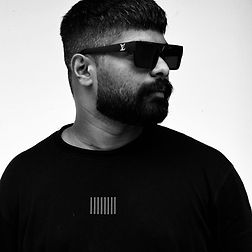
Karthik is PhD Scholar at the department of International Relations in Shiv Nadar University. He likes to cook his food a little too slowly but mostly enjoys eating, he enjoys watching and commenting something deep about cinema which usually gets a little too out of hand at times but so what?! he enjoys writing at times and at times singing for his friends. You can connect with him at karthikpayyalil@gmail.com


Comments